Archivo:Solar sail material.jpg
Ir a la navegación
Ir a la búsqueda
Tamaño de esta previsualización: 800 × 579 píxeles. Otras resoluciones: 320 × 232 píxeles | 640 × 463 píxeles | 1024 × 741 píxeles | 1280 × 926 píxeles | 2560 × 1853 píxeles | 3000 × 2171 píxeles.


Archivo original (3000 × 2171 píxeles; tamaño de archivo: 2,03 MB; tipo MIME: image/jpeg)

Resumen
| Descripción |
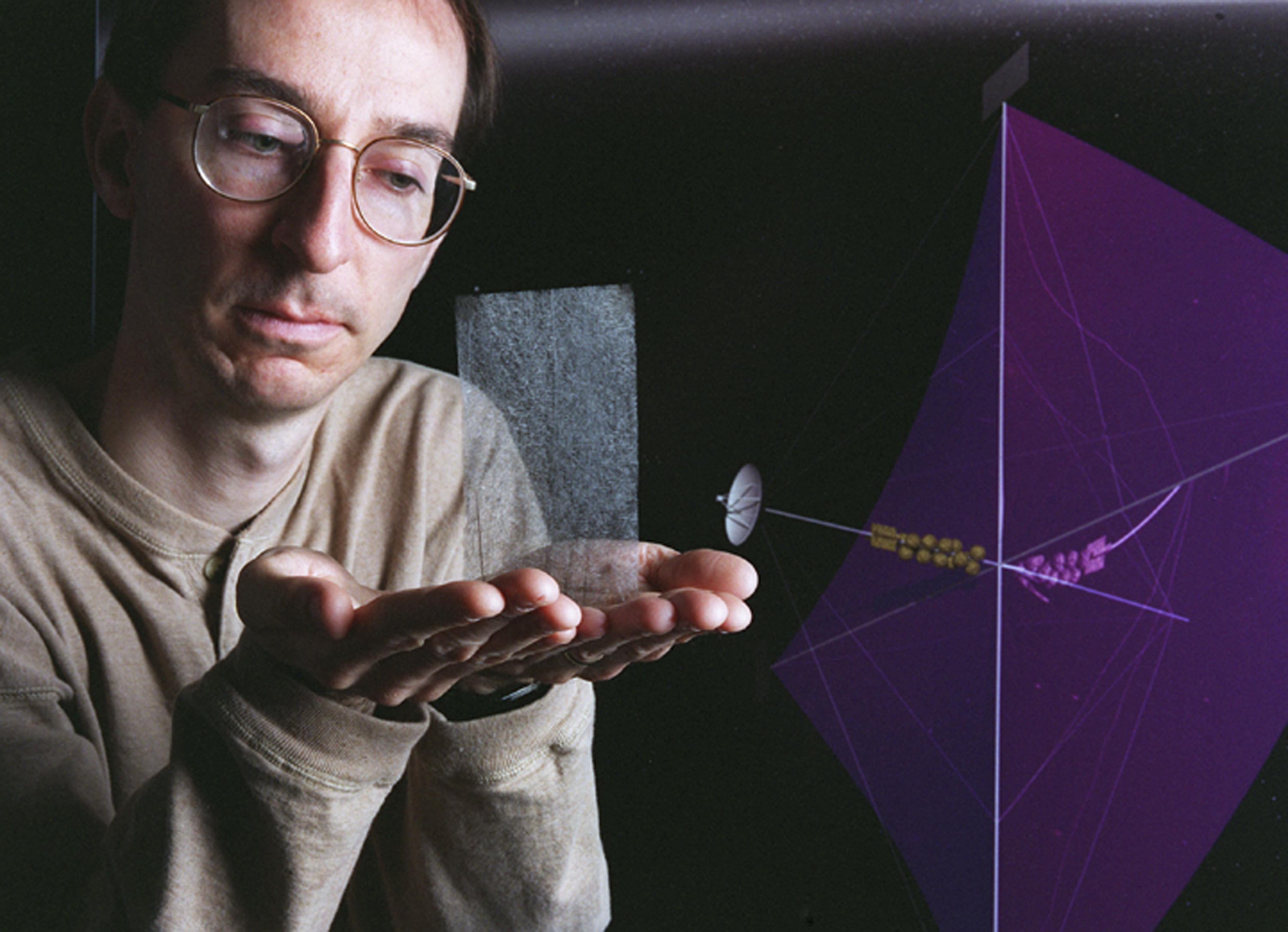
English: Engineers at Marshall Space Flight Center's (MSFC) Interstellar Propulsion Research department are proposing different solutions to combustion propellants for future space travel. One alternative being tested is the solar sail. The idea is, once deployed, the sail will allow solar winds to propel a spacecraft away from Earth and towards its destination. This would allow a spacecraft to travel indefinitely without the need to refuel during its long journey. Thin reflective sails could be propelled through space by sunlight, microwave beams, or laser beams, just as the wind pushes sailboats on Earth. The sail will be the largest spacecraft ever built, spanning 440 yards, twice the diameter of the Louisiana Super Dome. Construction materials are being tested in a simulated space environment, where they are exposed to harsh conditions to test their performance and durability in extremely hot and cold temperatures. A leading candidate for the construction material is a carbon fiber material whose density is less than 1/10 ounce per square yard, the equivalent of flattening one raisin to the point that it covers a square yard. In space, the material would unfurl like a fan when it is deployed from an expendable rocket. This photo shows Les Johnson, manager of MSFC's Interstellar Propulsion Research Center holding the rigid, lightweight carbon fiber. An artist's concept of the sail is on the right. Mankind's first venture outside of our solar system is proposed for launch in a 2010 timeframe. An interstellar probe, powered by the fastest spacecraft ever flown, will zoom toward the stars at 58 miles per second. It will cover the distance from New York to Los Angeles in less than a minute and will travel over 23 billion miles beyond the edge of the solar system. |
| Fecha | |
| Fuente | http://nix.ksc.nasa.gov/search.jsp?R=MSFC-0002024 |
| Autor | NASA/Marshall Space Flight Center |
| Permiso (Reutilización de este archivo) |
Public domain |

|
Este archivo fue catalogado por Marshall Space Flight Center de la Administración Nacional de Aeronáutica y del Espacio (NASA) de los Estados Unidos de Américabajo el identificador de foto: MSFC-0002024.Esta etiqueta no indica el estado de los derechos de autor del trabajo adjunto. Se requiere una etiqueta de derechos de autor normal. Para más información vea Commons:Sobre las licencias. Otros idiomas:
|
Licencia

|
Este archivo es de dominio público porque fue creado por la NASA. Las políticas sobre copyright de la NASA estipulan que «el material de la NASA no está protegido con copyright a menos que se indique lo contrario». (Políticas sobre copyright de la NASA o Políticas sobre la utilización de imágenes del Jet Propulsion Laboratory). |  |
 |
Advertencias:
|
Historial del archivo
Haz clic sobre una fecha y hora para ver el archivo tal como apareció en ese momento.
| Fecha y hora | Miniatura | Dimensiones | Usuario | Comentario | |
|---|---|---|---|---|---|
| actual | 12:54 23 jun 2005 | | 3000 × 2171 (2,03 MB) | wikimediacommons>Bricktop |
Usos del archivo
La siguiente página usa este archivo:
